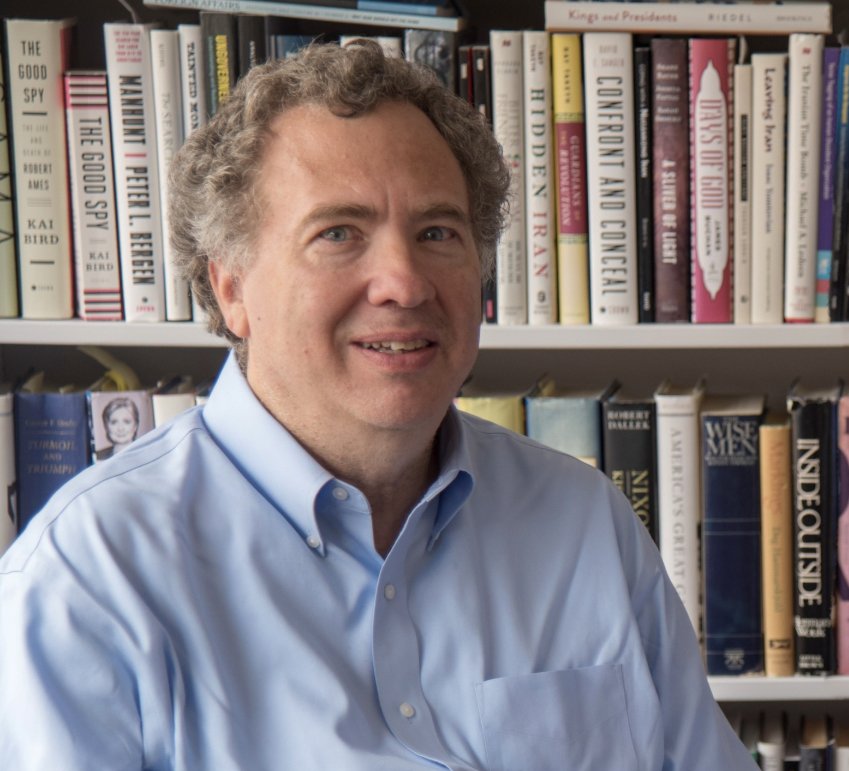
David Makovsky
Expertise in Arab-Israeli Relations, Peace Process, Israel and Palestinians
David Makovsky is the Ziegler Distinguished Fellow at The Washington Institute for Near East Policy, director of its Project on Arab-Israel Relations, an adjunct professor at Johns Hopkins School of Advanced International Studies, and a former senior advisor to the U.S. Special Envoy for Israeli-Palestinian Negotiations in the Office of the Secretary of State. A frequent analyst on PBS NewsHour and other national media, he offers audiences balanced, evidence-based analysis grounded in decades of engagement with senior leaders across Israel and the Middle East. He personally knows many of the political and security leadership in Israel for decades and key leaders in the Arab world.
“My style is to weave together both insight and inside anecdotes to draw in people and illuminate a broader message. I try to be analytical, nonpartisan, and focused on strategic implications. I want people to understand the stakes and consequences of an issue. At same time, I don’t want to be dry. I want to draw upon my close following of an issue including my many visits with people at the very top – Israelis and Arabs -- so people feel like they are in the room with my visit to the Mideast.”
A native of St. Louis, Missouri, Mr. Makovsky received a bachelor's degree from Columbia University and a master's degree in Middle East studies from Harvard University.
Current Presentations
The Future of U.S.-Israel Relations: Can the Partnership Withstand America's Political Transformation?
For decades, support for Israel was one of the few truly bipartisan pillars of American foreign policy. Today, that consensus is under growing strain. Is this shift a temporary reaction to the Gaza war, or does it reflect deeper demographic, political, and generational changes that will shape the relationship for years to come? The answer is not predetermined, and distinguishing between short-term reactions and longer-term structural trends is essential to understanding where the relationship is headed.
This presentation examines the evolving foundations of American support for Israel. How have October 7, the Gaza war, and the humanitarian debate affected public opinion? What roles have political polarization, social media, changing media consumption, universities, demographic trends, and generational attitudes played? Which shifts are likely to fade as the war recedes, and which may prove enduring?
The discussion also explores how these changes affect policymaking in Washington. Can bipartisan support be restored, or is the relationship entering a more partisan era? How might Congress, future administrations, and America's broader Middle East strategy be shaped if public attitudes continue to evolve?
Finally, the presentation considers what Israel, American Jewish leaders, and U.S. policymakers can do to rebuild broader public support. Which policies and messages are most likely to resonate across the American political spectrum? What strategic adjustments may be necessary to preserve one of America's most important international partnerships?
Drawing on decades of research and engagement with senior officials in both Washington and Jerusalem, this presentation offers a balanced, evidence-based framework for understanding not only how American attitudes toward Israel are changing, but also what can realistically be done to strengthen the partnership for the next generation.
Israel at a Crossroads: A New Direction for Israel, the U.S., and the Middle East?
Israel’s 2026 elections mark a pivotal moment for the country and the wider Middle East. But will a new political landscape translate into a fundamental shift in Israeli policy—or will continuity prevail?
How will Israel approach the Iranian threat in the aftermath of war? Will its relations with Gulf Arab states deepen or become more strained? Can Israel reverse its growing international isolation and strengthen its standing in the United States? What do fierce domestic debates over judicial power and ultra-Orthodox military service reveal about Israel’s evolving identity and political future? And how might the revolution in artificial intelligence reshape Israel’s economic and strategic position?
Drawing on decades of experience analyzing Israeli politics, U.S.-Israel relations, and Middle East diplomacy, David Makovsky explores the forces shaping Israel’s next chapter. The talk examines the implications for Washington, prospects for regional cooperation and confrontation, and whether Israel’s domestic political changes will fundamentally alter its role in an increasingly volatile Middle East.
The Iran War and its Aftermath: What has Changed for the Mideast?
The military confrontation between US, Israel and Iran marked a watershed in the Middle East, but its ultimate significance will depend less on what occurred during the fighting than on what follows. Did the conflict fundamentally weaken Iran's regional position, or merely set the stage for another cycle of confrontation?
This presentation examines the strategic consequences of the war across the region. How much damage was inflicted on Iran's military and nuclear capabilities? Has Tehran's deterrence been significantly eroded, or will the regime adapt by relying even more heavily on asymmetric tools, proxy networks, cyber capabilities, and missile forces? What lessons have Israel, the Gulf states, and Washington drawn from the conflict?
The discussion also explores the broader regional landscape. How have Hamas, Hezbollah, and other Iranian-backed groups been affected? Can Arab states capitalize on Iran's setbacks to deepen regional cooperation, or will uncertainty encourage hedging among America's partners? What role will Saudi Arabia, Turkey, and emerging regional alignments play in shaping the next phase of Middle Eastern politics? How likely is Saudi Arabia to pursue the Abraham Accords with Israel after the upcoming Israeli election.
Finally, the presentation addresses the implications for U.S. policy. Has the conflict reinforced American deterrence, or increased the risks of future escalation? Can diplomacy still constrain Iran's nuclear ambitions, or has the region entered a prolonged period in which military preparedness and economic pressure will remain the dominant tools?
Rather than offering easy conclusions, this presentation provides a framework for understanding how the Middle East is being reshaped—and the critical indicators to watch as the region enters its next chapter.
Additional Presentation Topics
Call 518-852-1484 for more information.
• Is Peace Between Israel and Lebanon Possible or Will Hezbollah Be Strong Enough to Thwart?
• How Can American Public Opinion Towards Israel Turnaround Amid the Challenges of War?
• Is a Post-Hamas Gaza Possible? Is there Hope for Israelis and Palestinians?
• How Has October 7th and the Ensuing Israel-Hamas War Changed Israeli Society Forever
• What is the Future of Trump Mideast Foreign Policy? Can the Abraham Accords Be Expanded?
• After 200 American College Campus Visits: What Has Changed?
Testimonials
I cannot thank you enough for the huge gift you gave us last night. In a little over an hour you clearly and articulately gave us a deep understanding of the Accords, the factors that led to the agreements, and what this normalization will mean for the region and all the players. It felt to me like an insider’s look into the Middle East, with so many mind-blowing details…The handful of people I was able to speak with after the program told me they felt more hopeful about Israel and the Middle East than they’ve felt in decades. I share that feeling.
– Rabbi Lavey Derby, Peninsula JCC Director of Jewish Life
Thank you so much for your incredible talk... During my breakout room, and in the 2 days since, I've received nothing but fantastic feedback from my board. Thank you for helping us start the year on an interesting, thought-provoking note.
– Max Moline, NextGen Director Jewish Federation of Greater Philadelphia
Thank you for your ‘fire hose’ download of education last evening. I’ve received applause from both left and right sides of our community!
– Harvey Cohen, Board of Directors, Jewish Federation of Greater Naples
We have been doing speakers/entertainers on Sunday evenings since the pandemic began…The best we have had so far was a panel of Ambassador Dennis Ross and Professor David Makovsky. They were stellar. They gave detailed analysis of the UAE/Bahrain normalization agreements, the Iran deal, and the future of U.S.-Israel relations under the Biden Administration. I can't recommend them enough.
– Rabbi Bob Slosberg, Congregation Adath Jeshurun in Louisville
Your presentation on January 6th was exceptional. Everyone had the most positive feedback. You were so kind to accommodate those that wanted commentary on the state of our country on that day. Hearing the behind-the-scenes information on the Abraham Accords makes me feel like this will be a lasting peace. I would love to bring you both back as things evolve on all fronts, for an update.
– Cheri DeKofsky, Executive Director, Jewish Federation of Ventura County
Dear David, we want to take this opportunity to thank you for taking time out of your busy schedule to meet with a group of Federation professionals and volunteers last week. Your presentation provoked a thoughtful and lively discussion among the group. We look forward to working with you in the future.
– David Golder, Chair, Domestic Policy and Government Affairs, and Elana Broitman, Senior Vice President Public Affairs, Jewish Federations of North America